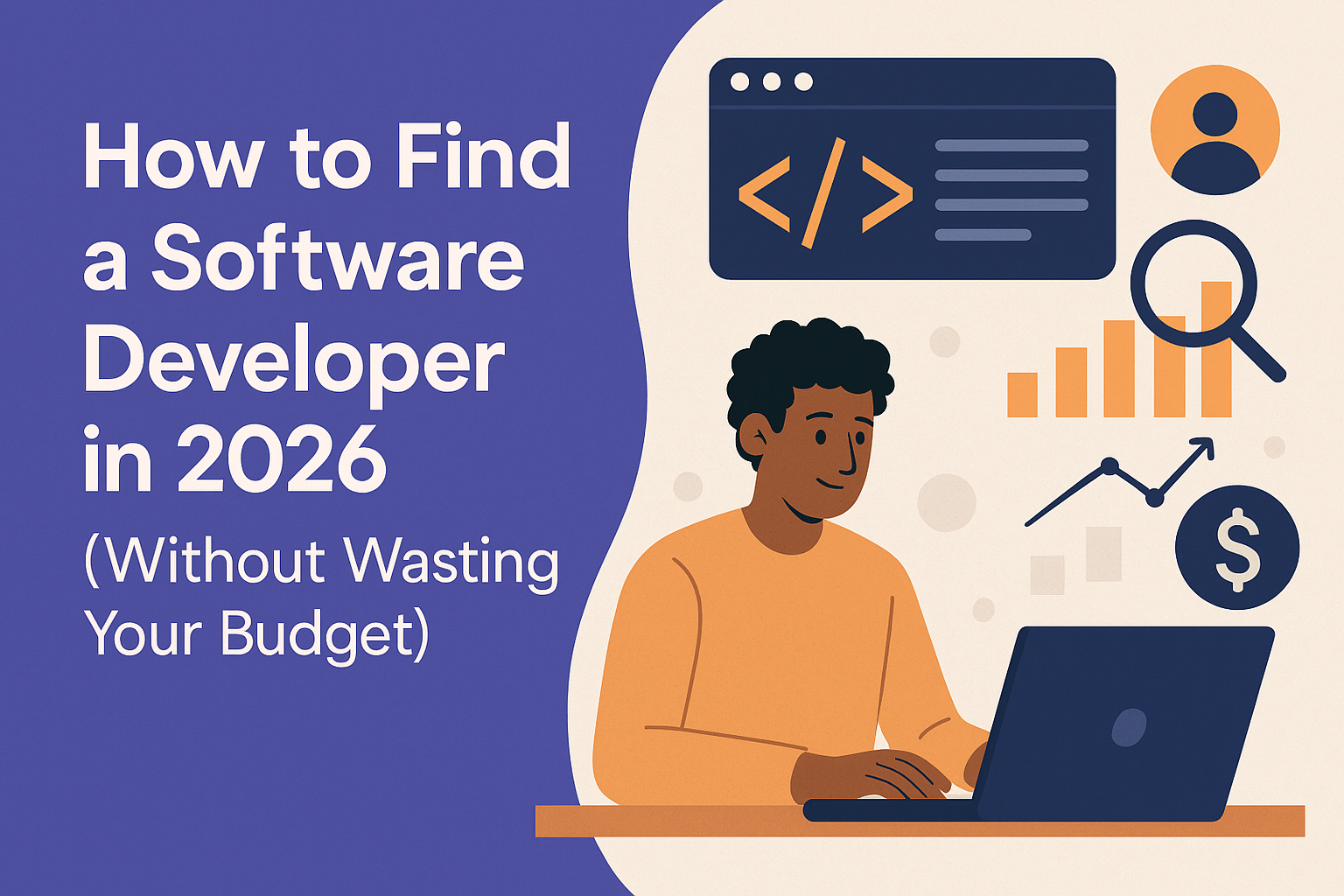
Hiring a software developer in 2026 is not simply about filling a technical role. It is about choosing the person or team that will shape the architecture, scalability, and long-term stability of your business product.
With remote work now standard, global talent pools accessible, and AI accelerating development workflows, companies have more choices than ever. Yet despite this access, many projects still fail due to poor hiring decisions, unclear scope, or budget miscalculations.
If you want to find a software developer in 2026 without wasting your budget, you need a structured approach that combines clarity, evaluation, and strategic thinking.
Start With Strategic Clarity, Not Talent Search
Many founders begin by searching for developers before fully understanding what they need built. This is one of the most expensive mistakes in software development.
Before reaching out to candidates, define your project foundation:
• The business problem your software solves
• The type of users who will interact with it
• The core functionality required for launch
• The long-term vision for scalability
Software today is rarely a standalone system. It connects with payment gateways, CRMs, APIs, cloud infrastructure, automation systems, and analytics tools. The clearer your foundation, the more accurate your estimates and timelines will be.
Without clarity, even the best developer cannot protect your budget.
Decide What Type of Developer You Actually Need
The term “software developer” in 2026 can mean many things. Identifying the right specialization is critical.
You may need:
• A frontend developer for user interfaces
• A backend developer for server-side logic and databases
• A full-stack developer for end-to-end builds
• A DevOps specialist for infrastructure and deployment
• An AI or automation engineer for intelligent systems
• A team that combines all of the above
Hiring the wrong specialization often leads to mid-project restructuring, which increases cost and delays launch timelines.
Understanding your technical requirements helps narrow your search to developers with relevant expertise rather than generalists who may lack depth.
Choose the Right Hiring Model
Your budget efficiency depends heavily on how you structure your hiring model.
Freelancers are suitable for smaller, clearly defined projects or feature-based enhancements. They can be cost-effective but require you to manage coordination and quality control.
In-house developers provide long-term stability and deep product familiarity. However, recruitment, onboarding, and operational overhead make this the most expensive path in the short term.
Software development agencies or dedicated teams offer structured delivery processes, built-in project management, quality assurance, and scalability. For many startups and SMEs in 2026, this model balances cost predictability with technical depth.
The correct model depends on whether you are building a one-time solution or a continuously evolving product.
Where to Find Reliable Software Developers
Access to global talent has expanded, but quality varies significantly across platforms.
Professional directories and B2B platforms allow you to compare agencies, read verified reviews, and explore detailed case studies.
Freelance marketplaces provide access to independent developers with varied expertise levels. These platforms are useful when your scope is precise and deliverables are measurable.
LinkedIn, GitHub, and technology communities are strong channels for discovering experienced developers, especially those actively contributing to open-source projects or industry discussions.
Referrals from business networks often reduce hiring risk, but independent evaluation remains essential.
The goal is not just finding availability. It is finding alignment.
How to Evaluate Developers Without Guesswork
Evaluation should go beyond technical buzzwords and portfolio screenshots.
A strong developer demonstrates:
• Clear understanding of your business goals
• Logical explanation of architecture decisions
• Structured development processes
• Transparent milestone planning
• Defined testing and quality assurance methods
Review past projects carefully. Look for complexity similar to yours. Ask how challenges were handled, how scaling was managed, and how long-term maintenance was structured.
Communication during early conversations is often the best predictor of future collaboration. Developers who ask strategic questions and provide thoughtful insights tend to deliver more stable results.
Understanding Cost Structures in 2026
Software development pricing in 2026 varies widely depending on geography, experience level, complexity, and integration requirements.
Several factors influence your final investment:
• Feature complexity and customization
• Infrastructure and cloud hosting setup
• Third-party integrations
• Security and compliance standards
• UI/UX depth and interaction design
• Ongoing maintenance and updates
Extremely low bids often indicate reduced testing, rushed timelines, or limited post-launch support. While premium pricing does not always guarantee excellence, experienced developers typically reduce the risk of expensive future rework.
Your budget should reflect both immediate development and long-term stability.
Contracts, Ownership, and Protection
Budget protection does not stop at choosing the right developer. It extends to contract clarity.
A professional agreement should clearly define:
• Scope of work
• Milestones and payment schedules
• Intellectual property ownership
• Maintenance and support terms
• Confidentiality provisions
Ambiguous contracts often lead to disputes, scope creep, and unexpected additional costs.
Transparency upfront protects both parties and strengthens collaboration.
Common Hiring Mistakes That Drain Budgets
Even experienced founders make avoidable mistakes when hiring software developers.
Frequent issues include:
• Choosing the cheapest proposal without quality validation
• Starting development without a finalized scope
• Ignoring scalability and future growth requirements
• Overlooking testing and security standards
• Failing to define post-launch support
Software projects rarely fail because of a single bug. They fail due to systemic misalignment between expectations, execution, and technical planning.
Avoiding these mistakes can save significant financial resources.
Building a Long-Term Technology Partnership
The most successful businesses in 2026 view software development as a strategic partnership rather than a transactional service.
A reliable developer or team contributes beyond coding. They:
• Advise on architecture decisions
• Recommend performance optimizations
• Identify potential risks early
• Suggest scalable improvements
• Align technical execution with business growth
When hiring decisions prioritize collaboration, transparency, and expertise, budget efficiency naturally improves.
Final Perspective
Finding a software developer in 2026 without wasting your budget requires preparation, evaluation, and strategic alignment.
The process begins with clarity, continues with careful vetting, and succeeds through structured execution.
Software is not just an expense line. It is infrastructure for growth.
Choosing the right developer ensures that your investment compounds over time instead of requiring costly rebuilds in the future.