Legacy software systems continue to support many critical business operations across industries such as finance, healthcare, manufacturing, retail, logistics, and government. While these systems were reliable at the time they were built, they often become a major obstacle to scalability, security, innovation, and digital transformation as business needs evolve.
Legacy software modernization is the process of upgrading, refactoring, or re-architecting outdated applications to align with modern technologies, cloud platforms, and evolving business requirements, without disrupting core operations.
This guide explains what legacy software modernization is, why it matters, how it works, and how organizations can modernize strategically while minimizing risk and maximizing return on investment.
What Is Legacy Software Modernization?
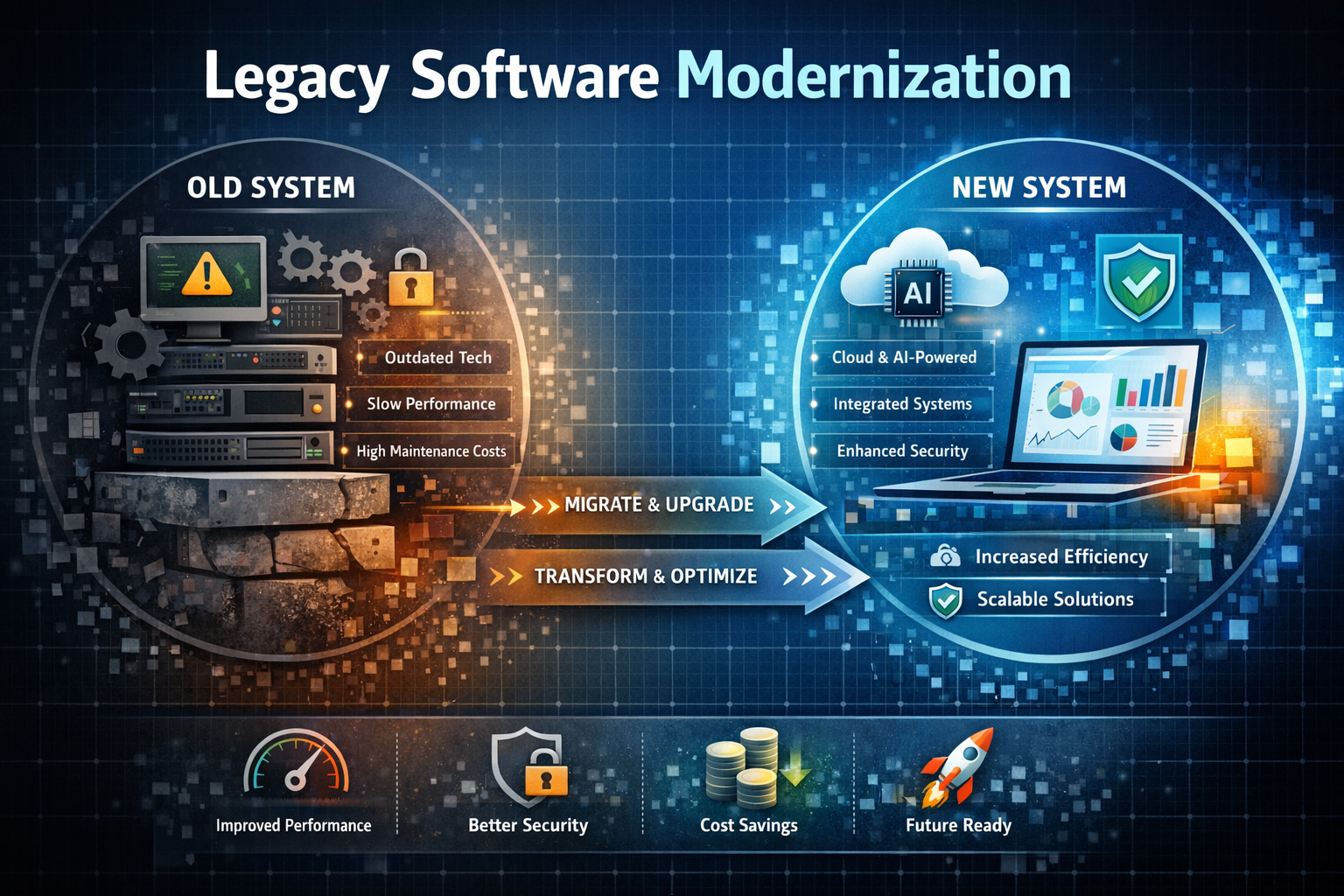
Legacy software modernization refers to transforming outdated or monolithic systems into modern, scalable, secure, and cloud-ready applications. These legacy systems are often built using older technologies such as Java, .NET, PHP, or even mainframe architectures, making them difficult to maintain, integrate, and scale.
Modernization does not always mean replacing an entire system. In many cases, a phased or incremental modernization approach is more effective, allowing organizations to preserve existing business logic while upgrading the underlying technology.
Why Legacy Systems Become a Business Risk
As organizations grow and digital expectations increase, legacy systems introduce several business and operational risks.
Performance and Scalability Challenges
Legacy applications are typically not designed for cloud environments or modern workloads, leading to performance bottlenecks and limited scalability during peak demand.
High Maintenance Costs
Outdated software requires specialized skills, manual processes, and legacy infrastructure, significantly increasing maintenance and operational expenses.
Security and Compliance Risks
Legacy systems often lack modern security standards, exposing businesses to cybersecurity threats and compliance issues related to regulations such as GDPR, HIPAA, and ISO.
Limited Innovation
Older systems struggle to integrate with modern technologies like AI, machine learning, APIs, and automation tools, slowing down innovation and digital transformation initiatives.
Legacy Software Modernization vs System Replacement
Many organizations consider completely replacing their legacy systems. While replacement may seem appealing, it often comes with high costs, long timelines, and significant operational risk.
Legacy software modernization provides a more flexible alternative. By modernizing in phases, organizations can reduce disruption, preserve mission-critical functionality, and achieve faster time-to-value compared to full system replacement.
Common Legacy Software Modernization Strategies
Choosing the right modernization approach depends on business goals, system complexity, and budget.
Application Refactoring
Improving code quality and structure without changing the system’s core functionality to enhance performance, maintainability, and scalability.
System Re-Architecture
Redesigning monolithic applications into modular or microservices-based architectures for better flexibility and cloud compatibility.
Cloud Migration
Moving applications from on-premise infrastructure to cloud platforms such as AWS, Azure, or Google Cloud to improve reliability, scalability, and cost efficiency.
Incremental Modernization
Modernizing systems gradually using phased approaches that allow continuous improvements with minimal downtime.
The Role of AI in Legacy Software Modernization
Artificial intelligence and machine learning are playing an increasingly important role in modernizing legacy systems.
AI-driven modernization enables:
- Automated code analysis and refactoring
- Intelligent data migration and validation
- Predictive performance optimization
- Process automation and advanced analytics
By integrating AI capabilities into modernized systems, organizations can unlock smarter decision-making, automation, and future-ready digital experiences.
Legacy Software Modernization Cost Considerations
The cost of legacy software modernization varies based on several factors, including:
- Size and complexity of the application
- Technology stack and system architecture
- Level of cloud migration required
- Security and compliance requirements
- Integration of AI and automation features
Although modernization requires upfront investment, it significantly reduces long-term maintenance costs and improves operational efficiency, delivering strong ROI over time.
Best Practices for Successful Legacy Modernization
A well-planned modernization strategy ensures long-term success and minimal risk.
- Conduct a detailed legacy system assessment
- Define a clear modernization roadmap aligned with business goals
- Use a phased or incremental approach
- Prioritize security, data integrity, and compliance
- Ensure scalability and cloud readiness
- Work with an experienced legacy modernization partner
How Stalwart Info Helps Modernize Legacy Systems
Stalwart Info partners with businesses to modernize legacy software systems using a structured, secure, and future-focused approach.
Our legacy software modernization services include:
- Legacy system assessment and modernization planning
- Application refactoring and performance optimization
- Cloud migration and re-architecture
- AI-driven automation and analytics integration
- ERP, CRM, and enterprise software modernization
With expertise in custom software development, web and mobile applications, AI/ML, cloud solutions, and system integration, we help organizations reduce technical debt and accelerate digital transformation.
Frequently Asked Questions
What is legacy software modernization?
Legacy software modernization is the process of upgrading outdated systems to modern technologies while retaining critical business functionality.
Is modernization better than replacing legacy systems?
In most cases, modernization is more cost-effective and less risky than full system replacement, especially for mission-critical applications.
How long does legacy modernization take?
Timelines depend on system complexity and scope, but phased modernization allows improvements without major operational disruption.
Can legacy systems support AI and automation?
Yes. With proper modernization, legacy systems can integrate AI, machine learning, and automation tools effectively.
Does modernization improve security?
Yes. Modernization significantly enhances security by implementing modern frameworks, cloud security standards, and compliance controls.
Conclusion
Legacy software modernization is no longer optional—it is a strategic necessity for organizations that want to remain competitive, secure, and scalable. By modernizing legacy systems using cloud, AI, and modern architectures, businesses can transform outdated applications into powerful digital assets.
If your organization is planning to modernize legacy systems or explore a phased modernization strategy, working with the right technology partner can make all the difference.