AI Is Not an Idea. It’s an Operating Model.
Artificial Intelligence is no longer a future concept or an experimental idea. Yet many businesses still approach AI as a tool to try rather than a system to implement.
The truth is simple:
AI is not about tools. It is about how your business operates every day.
Real AI value is created only when it is embedded into business workflows and daily operations, improving efficiency, decision-making, and scalability.
AI Is Not About Using Tools, It’s About Execution
Using AI tools does not mean AI adoption.
True AI implementation in business happens when:
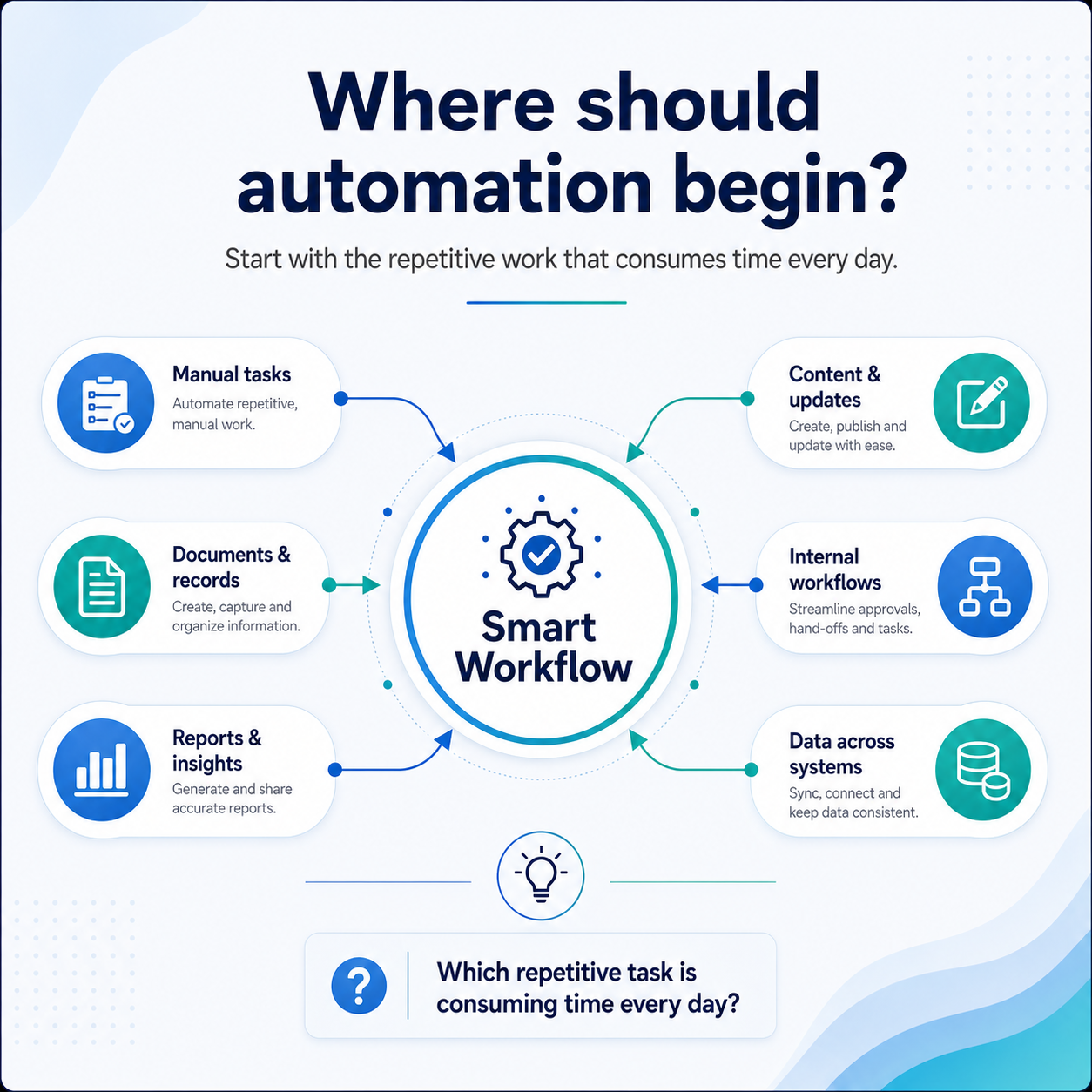
- Manual and repetitive processes are automated intelligently
- Data-driven decision-making replaces guesswork
- Systems improve continuously without human intervention
- Teams focus on high-value work instead of operational overhead
When implemented correctly, AI becomes invisible, but its impact is measurable.
The Right Question Leaders Should Ask About AI
The question is not:
Which AI tool should we use?
The right question is:
Which business processes should no longer run the way they do today?
AI delivers results only when it is aligned with business process optimization, not layered on top of broken workflows.
How AI Improves Day-to-Day Business Operations
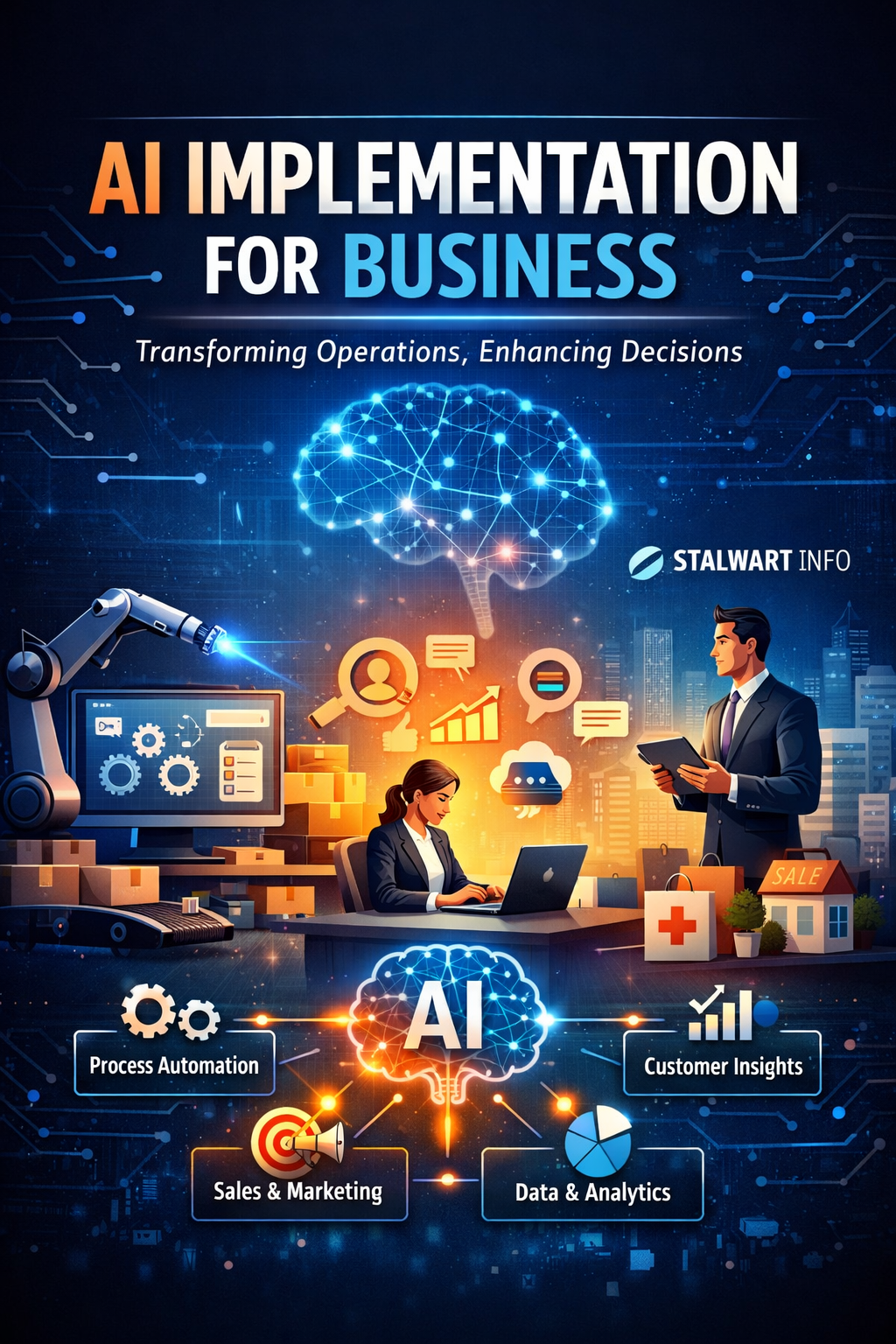
Across industries, AI is delivering real impact in four core areas:
1. Business Process Automation
AI streamlines workflows, identifies bottlenecks, and reduces delays, leading to faster execution and fewer errors.
2. Customer Experience & Support
AI-powered systems improve response accuracy, predict common issues, and reduce support load while maintaining a human experience.
3. Sales, Marketing & Growth
With AI-driven insights, businesses can qualify leads better, personalize communication, and continuously optimize marketing performance.
4. Decision-Making & Analytics
AI enables real-time reporting, forecasting, and performance insights, helping leadership teams make faster, more confident decisions.
Measuring the Real Impact of AI
AI success is not defined by innovation or complexity.
It is measured by:
- Time saved
- Cost reduction
- Fewer operational errors
- Improved scalability
- Stronger business performance
If AI is not improving these metrics, it is not implemented; it is only explored.
Why Most AI Initiatives Fail
AI adoption fails not because of technology, but because of execution gaps.
Common issues include:
- Unclear or inefficient business processes
- Poor data structure and integration
- Treating AI as a feature instead of a capability
- Lack of alignment between teams and systems
Successful companies focus first on process clarity, then on AI integration.
How Stalwart Info Helps Businesses Implement AI
At Stalwart Info, we focus on practical AI implementation, not selling tools.
We have helped businesses in the:
- Fashion & Retail industry
- Healthcare sector
- Real Estate industry
- Education sector
In each case, AI was tailored to improve daily operations, decision-making, and long-term scalability, based on the business’s actual needs.
Planning AI for Your Business? Start with Clarity.
If you are:
- Restructuring your business workflows
- Exploring AI solutions but unsure where to start
- Looking for real operational impact, not experimentation
We offer a free AI discovery call.
During this session, we:
- Understand your business operations
- Identify AI opportunities within existing workflows
- Recommend practical, high-impact AI use cases
No pressure. No generic advice. Just clarity.
AI is not the future.
AI is how modern businesses operate today.